Domino’s Pizza apertura convocatoria laboral|
Encontrar un empleo con contrato formal, salario estable y posibilidades reales de crecimiento no es una meta menor. En un contexto donde muchas personas buscan estabilidad financiera y acceso a beneficios corporativos, trabajar en Domino’s Pizza Chile puede representar una oportunidad concreta, especialmente para quienes desean ingresar al mercado laboral o consolidar experiencia en el sector gastronómico.
Más allá de ser una cadena de comida rápida, la empresa forma parte de un grupo internacional con presencia global, lo que implica procesos estructurados, cumplimiento de normativa laboral y un modelo de gestión profesional.
¿Qué es Domino’s Pizza Chile y por qué es atractiva como empleador?
Domino's Pizza es una de las franquicias de pizza más reconocidas a nivel mundial. En Chile opera con múltiples locales en distintas regiones, lo que genera un volumen alto de contratación durante todo el año.
Al ser parte de una marca internacional, ofrece un entorno laboral con estándares definidos, estructura organizacional clara y respaldo financiero. Para muchos trabajadores, esto se traduce en mayor estabilidad laboral, procesos formales de contratación y cumplimiento de obligaciones legales como aportes previsionales y cobertura de seguro.
Además, el sector gastronómico tiene una rotación constante, lo que significa que las vacantes suelen abrirse con frecuencia tanto en atención al público como en áreas internas.
Tipos de puestos que ofrece
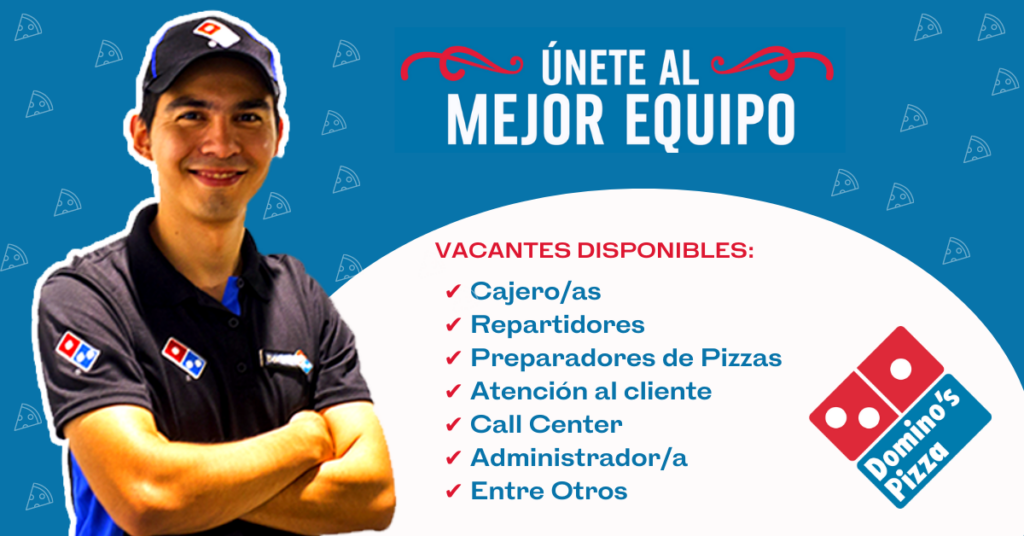
Domino’s Pizza Chile no solo contrata personal para mostrador. Entre las posiciones más habituales se encuentran:
• Atención al cliente: cajeros, personal de mostrador y toma de pedidos.
• Cocina y preparación: pizzeros y ayudantes de cocina.
• Logística: repartidores y coordinadores de despacho.
• Administración: encargados de local, supervisores y apoyo administrativo.
• Finanzas: control de caja, reportes y gestión interna en oficinas centrales.
• Tecnología: soporte de sistemas y plataformas digitales.
• Seguridad o mantenimiento: apoyo en funcionamiento de locales.
Esta diversidad permite que tanto estudiantes como personas con experiencia previa encuentren una oportunidad acorde a su perfil.
Requisitos obligatorios y deseables
Los requisitos varían según el cargo, pero en términos generales se solicita:
Requisitos obligatorios:
• Enseñanza media completa.
• Disponibilidad para trabajar en turnos rotativos.
• Documentación vigente para contrato formal.
• En el caso de repartidores, licencia de conducir al día.
Requisitos deseables:
• Experiencia previa en atención al cliente.
• Capacidad para trabajar bajo presión.
• Buena comunicación y actitud de servicio.
• Responsabilidad y puntualidad.
En cargos administrativos o financieros se puede requerir formación técnica o universitaria relacionada.
La mayoría de los puestos incluyen contrato efectivo, pago de cotizaciones previsionales, cobertura de seguro laboral y cumplimiento de normativa vigente. Esto garantiza aportes al sistema de seguridad social y acceso a beneficios como licencias médicas y protección ante accidentes.
Tener un salario formal y acceso a cuenta sueldo facilita la relación con el sistema bancario, permitiendo construir historial financiero y acceder eventualmente a créditos personales o productos financieros en mejores condiciones.
Beneficios adicionales
Además del ingreso mensual, pueden ofrecerse:
• Seguro médico complementario según cargo.
• Capacitación interna y posibilidad de ascenso.
• Bonos por desempeño o metas.
• Convenios con instituciones financieras.
• Descuentos en productos de la marca.
• Oportunidades de crecimiento profesional dentro de la empresa.
Estos beneficios corporativos ayudan a mejorar la estabilidad económica y permiten proyectarse a mediano plazo.
Errores comunes al postular
Muchos postulantes cometen fallas que pueden evitarse:
• Presentarse sin información básica sobre la empresa.
• Enviar un currículum desactualizado.
• No respetar horarios de entrevista.
• Descuidar la presentación personal o la comunicación.
Otro error frecuente es confiar en enlaces no oficiales. Siempre es recomendable verificar que la oferta provenga de canales reconocidos para evitar fraudes laborales.
Consejos para destacar en la entrevista
La actitud es determinante. En empresas de atención directa al público se valora la empatía, la energía y la disposición para aprender.
Demostrar responsabilidad, disciplina y capacidad de trabajo en equipo puede marcar la diferencia frente a otros candidatos. Es importante expresar interés por el crecimiento profesional y por permanecer en la empresa, no solo buscar un ingreso temporal.
También conviene explicar cómo el empleo puede formar parte de un proyecto personal más amplio, enfocado en estabilidad financiera y desarrollo de habilidades.
Recomendaciones para postular
La forma más segura de postular es a través del sitio oficial de la marca o plataformas de empleo reconocidas en Chile. Nunca se deben pagar sumas de dinero para participar en procesos de selección.
Mantener actualizado el currículum y revisar periódicamente las vacantes aumenta las posibilidades de contratación.
Cierre reflexivo
Trabajar en Domino’s Pizza Chile puede ser un punto de partida o una etapa sólida dentro de una carrera laboral más amplia. Un contrato formal, beneficios laborales y estabilidad salarial son herramientas para construir crecimiento económico personal.
Sin embargo, el valor de una persona no depende de un cargo o de un salario. El empleo es un medio para desarrollarse, adquirir experiencia y fortalecer la seguridad financiera, pero la verdadera base del crecimiento está en la disciplina, la actitud y la capacidad de seguir aprendiendo.






Deja una respuesta